Resource guarding in dogs: territorial and space-guarding behavior explained
admin
October 6, 2026
Resource guarding in dogs: territorial and space-guarding behavior explained
Resource guarding is not always about food.
A dog can guard a bone, toy, food bowl, bed, couch, crate, doorway, room, person, or even a certain area of the house. Some dogs stiffen or stare. Others growl, bark, snap, or bite when someone gets too close.
When a dog guards a place, owners often call it territorial behavior or space guarding. That can overlap with resource guarding because the dog sees that space as something worth controlling or protecting.
The important part is figuring out what the dog is guarding, why the behavior is happening, and how to handle it without making the problem worse.
What is resource guarding?
Resource guarding happens when a dog tries to keep control of something they value.
That resource might be:
- Food
- Bones
- Toys
- Treats
- A dog bed
- A crate
- The couch
- A favorite chair
- A doorway
- A room
- A person
- A certain area of the home
Some dogs only guard one thing. Others may guard several.
The behavior can be mild or serious.
One dog may simply put their body over a toy. Another may freeze and stare when someone approaches. A more serious case may involve growling, snapping, lunging, or biting.
Do not wait for a bite before taking the behavior seriously.
What does space guarding look like?
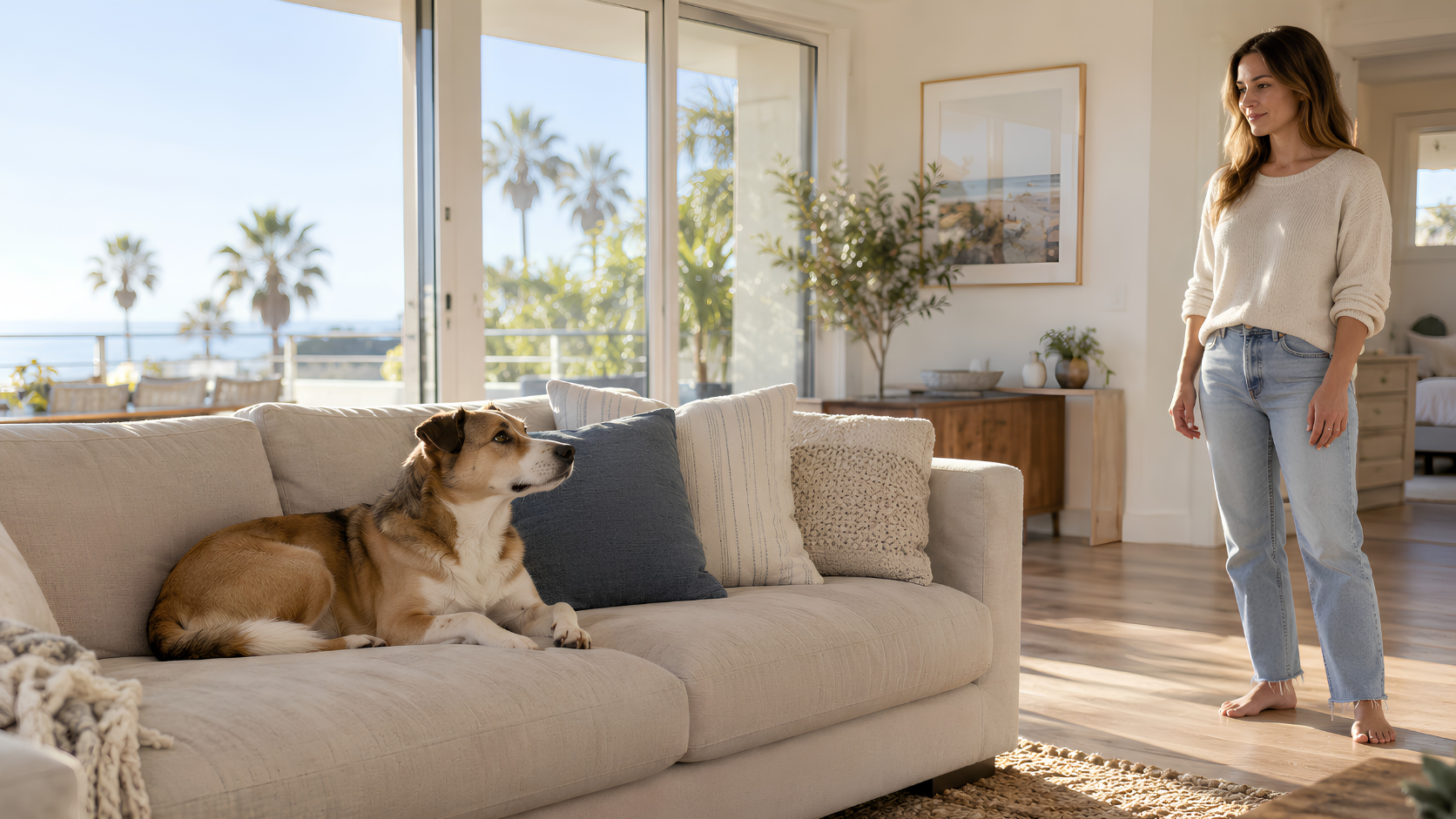
Space guarding happens when a dog becomes possessive over a particular location.
You may notice your dog:
- Growling when someone approaches the couch
- Refusing to move off the bed
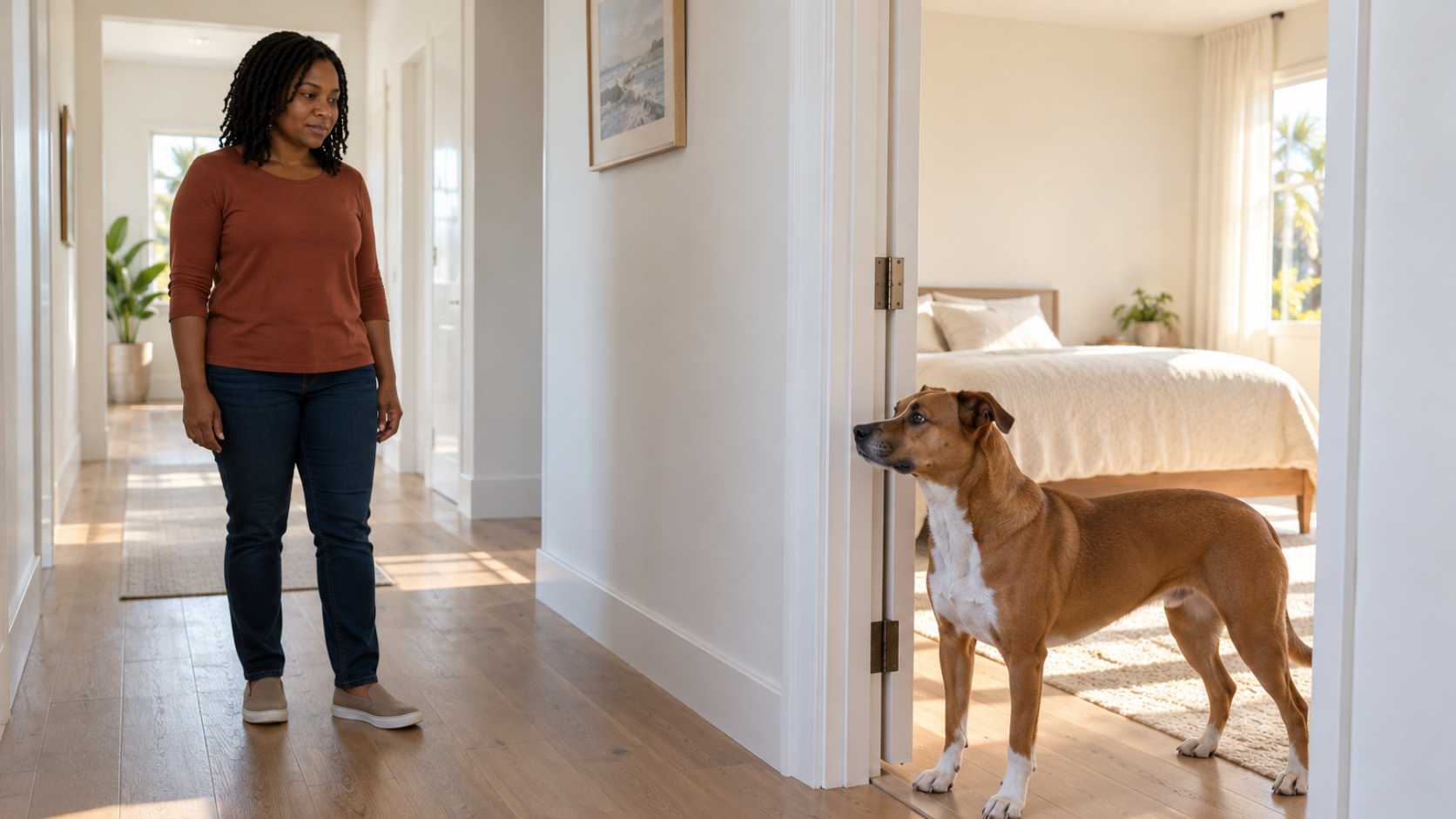
- Blocking a doorway
- Guarding a crate
- Stiffening when another dog enters a room
- Barking or lunging when someone approaches their resting area
- Guarding a person while sitting beside them
- Becoming defensive in a certain part of the house
Sometimes the dog is comfortable until someone enters “their” space.
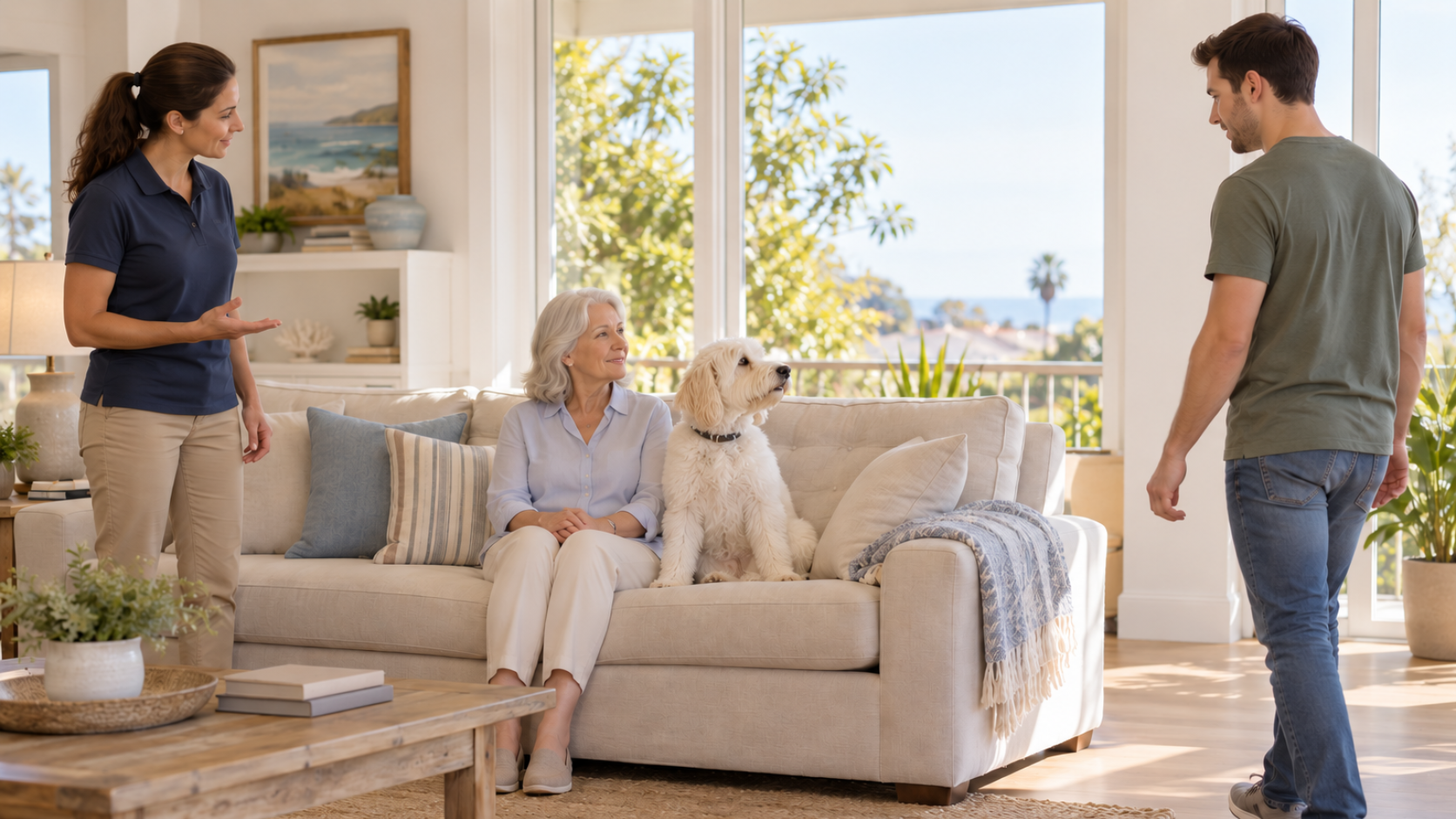
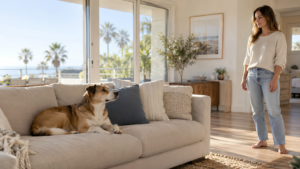
For example, a dog may sleep calmly on the couch but growl when the owner tries to sit down. Another dog may guard the bedroom from another dog in the home. Some dogs become possessive of the owner and react when another person or dog approaches.
These behaviors should not be ignored just because the dog has not bitten.
Growling, freezing, staring, and body blocking are warnings.
Why do dogs resource guard?
Dogs guard things for different reasons.
Some dogs naturally place a high value on certain resources. Others have learned that people or other dogs may take things away from them.
A dog may also guard because of:
- Fear
- Insecurity
- Competition with other dogs
- Past experiences
- Lack of structure
- Poor boundaries
- Stress
- Overattachment to a person
- Repeated conflict over food or objects
Sometimes owners accidentally make guarding worse.
If every time you approach your dog you grab the bone, take the toy, push the dog off the couch, or reach into the food bowl, the dog may start to think your approach means, “I am about to lose something.”
Now your presence becomes part of the problem.
Is territorial behavior the same as resource guarding?
Not exactly, but they can overlap.
Territorial behavior usually involves protecting an area such as the home, yard, gate, or property from people or animals entering it.
Resource guarding involves protecting something the dog considers valuable.
That valuable thing can be a space.
A dog guarding the couch from the owner is different from a dog barking at a stranger walking through the front gate. But both involve the dog trying to control access.
The training plan should be based on what the dog is actually doing, not just the label.
What are the early signs of resource guarding?
Resource guarding often starts before the growl.
Watch the body language.
Early warning signs can include:
- Suddenly eating faster
- Picking something up and moving away
- Turning the body away from you
- Hovering over an object
- Freezing
- Becoming very still
- Hard staring
- Lowering the head over the resource
- Blocking access
- Showing the whites of the eyes
- Lip lifting
- Growling
Do not ignore those signals.
A growl is information. The dog is telling you they are uncomfortable.
Punishing the growl without changing the reason behind it can remove the warning while leaving the problem in place.
That can make the dog harder to read.
What should you not do with a resource-guarding dog?
Do not turn it into a fight.
Avoid:
- Do not turn it into a fight. Avoid:
- Grabbing items out of the dog's mouth
- Chasing the dog for something they stole
- Physically dragging the dog off furniture
- Cornering the dog
- Repeatedly "testing" the dog
- Punishing growling
- Allowing children to approach a guarding dog
- Letting other dogs crowd the dog while eating
If the dog already has a bite history or serious aggression around resources, do not practice risky exercises on your own.
Management comes first.
Start by controlling the environment
You do not have to prove anything to the dog.
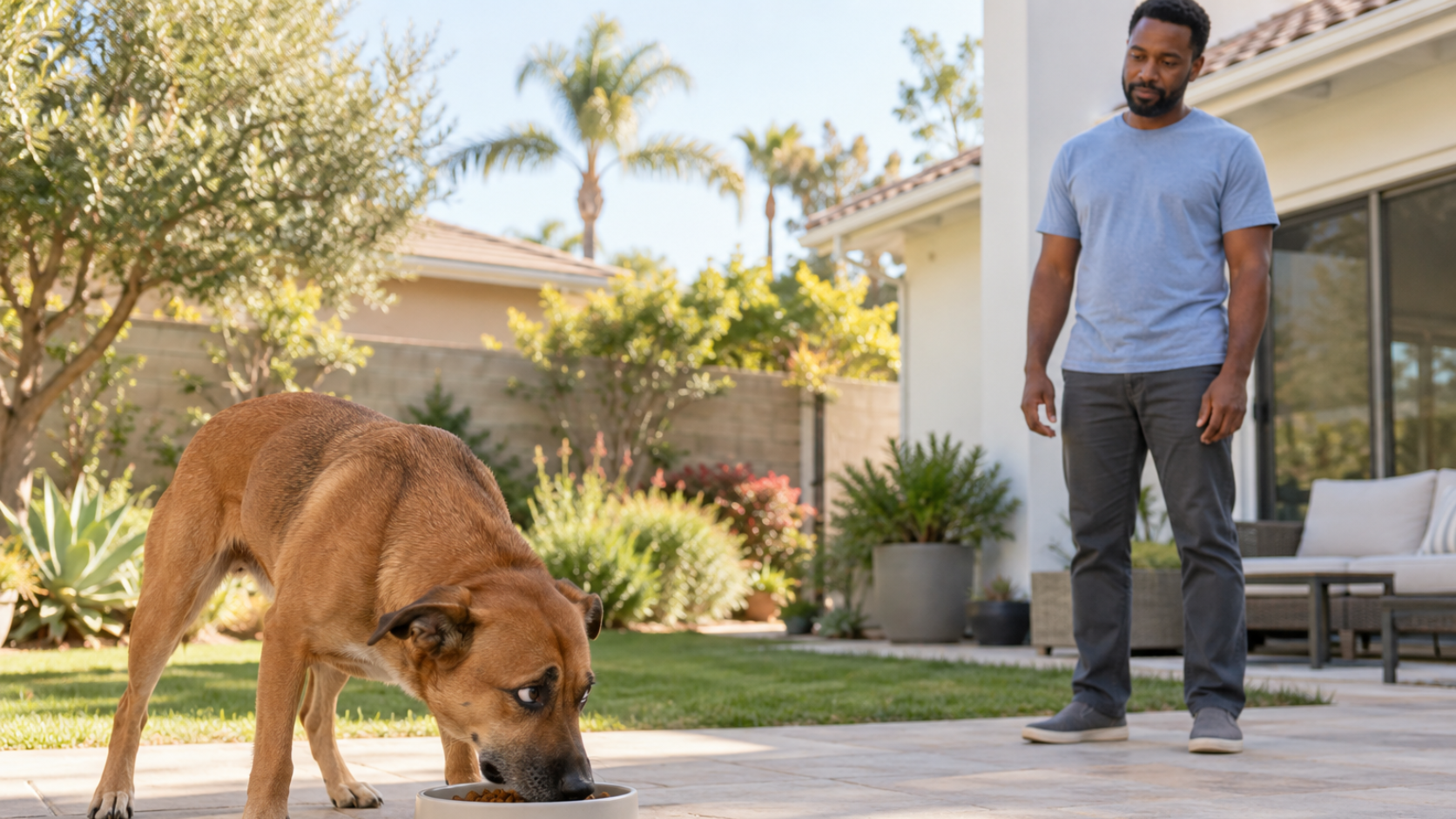
If your dog guards food, feed them in a calm area where people and other dogs will not bother them.
If the dog guards bones, do not hand out high-value bones around multiple dogs.
If the dog guards the couch, stop giving unrestricted access while you work on the behavior.
If the dog guards a crate, do not reach inside while the dog is cornered in it.
Preventing repeated guarding gives you room to train.
Every time the dog rehearses the behavior, that pattern can become stronger.
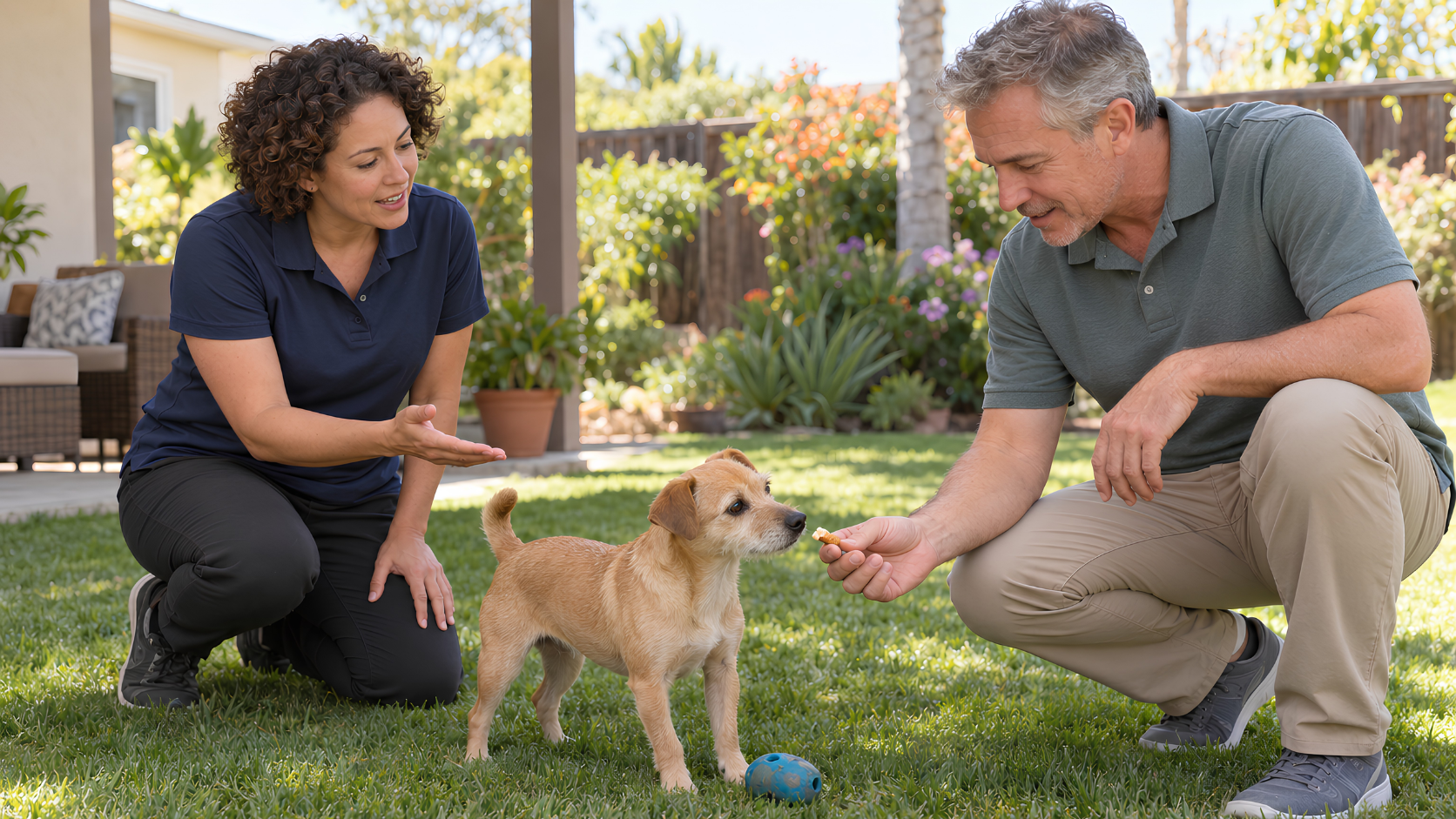
Teach your dog to trade
One useful skill is teaching the dog that giving something up does not always mean losing.
Start with something the dog likes but does not guard intensely.
Offer something better.
For example:
- Give the dog a low-value toy.
- Present a higher-value reward.
- Say "drop" or "out."
- When the dog releases the toy, reward them.
- When appropriate, give the toy back.
The dog begins to learn that releasing something can lead to a good outcome.
Do not start this exercise with an item the dog guards aggressively.
Start easy.
Build the skill before using it around harder situations.
Teach an "off" or "place" command for furniture and spaces
If your dog guards the couch, bed, doorway, or another space, teach them how to leave that area on command.
Do this before there is a confrontation.
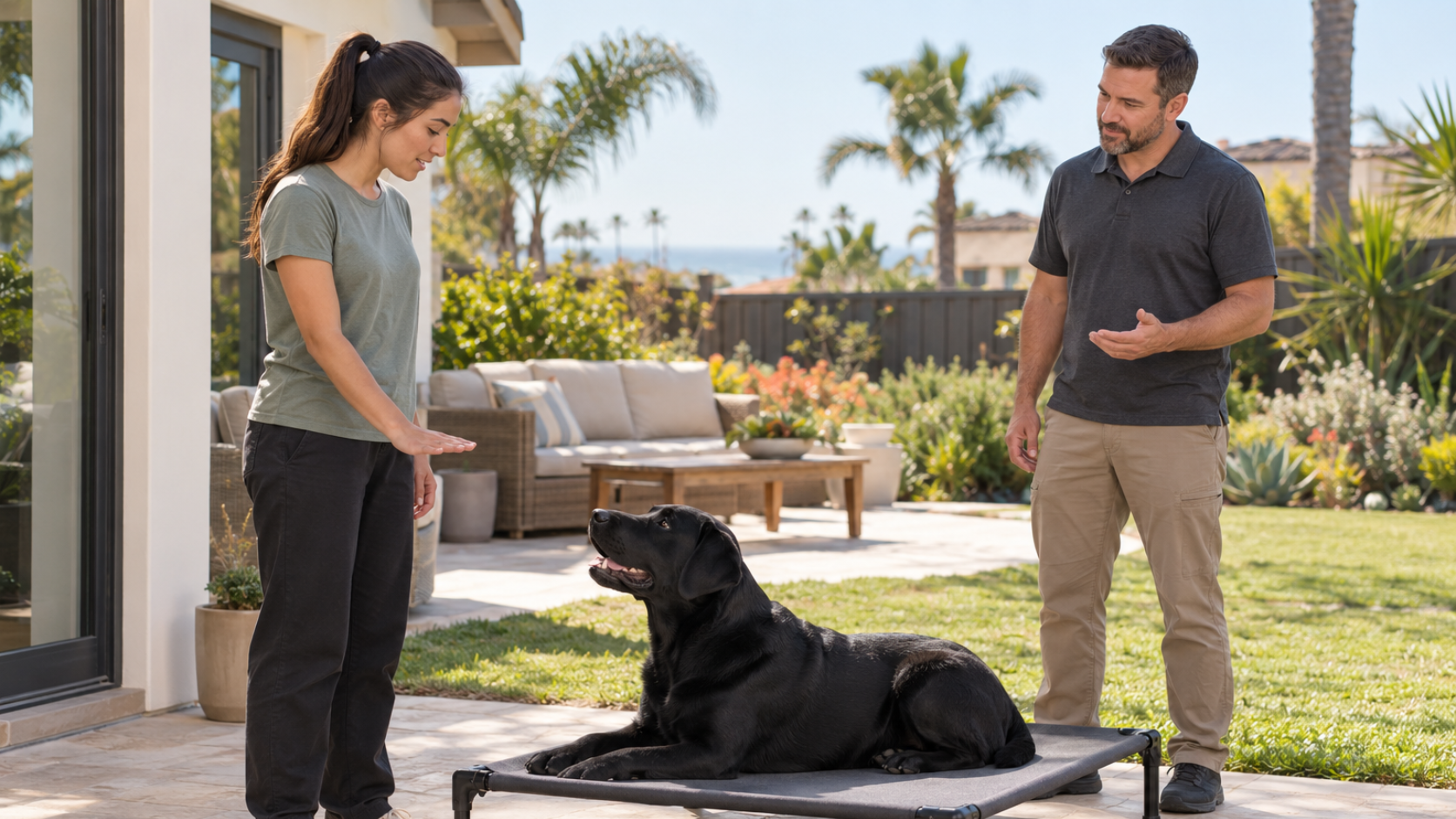
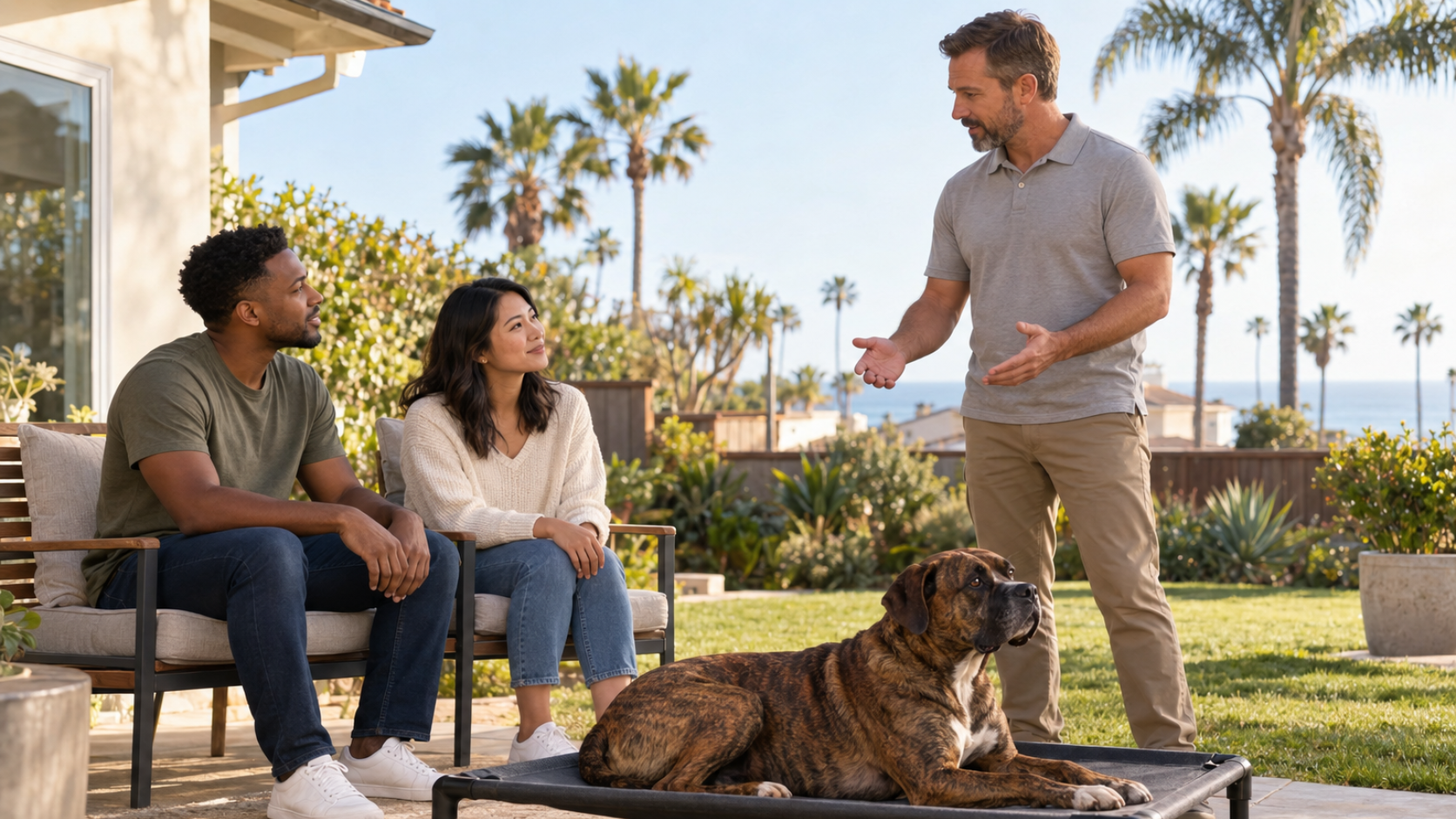
For example, teach the dog to go to a dog bed or place cot.
Reward the dog for going there and staying there.
Practice when the dog is calm.
If the dog is already growling from the couch, that is not the best time to begin teaching the command.
Training should happen before the conflict.
The goal is for the dog to understand:
“You can relax here, but if I ask you to move, you move.”
That is much clearer than physically fighting the dog for the couch.
Stop giving the dog control of valuable spaces
If your dog repeatedly guards furniture or certain rooms, access may need to become earned instead of automatic.
That does not mean the dog can never be on the couch again. It means the owner controls access.
The dog may be invited up and asked to get off.
The dog may have a place bed instead of choosing any location in the room.
Bedroom access may be limited while training is being worked on.
Clear rules reduce arguments.
If the dog believes the couch belongs to them and the owner has to negotiate every time, the pattern is already backwards.
What if the dog guards a person?
Some dogs guard their owner.
The dog may sit next to one person and growl when a spouse approaches. They may push between people, block another dog, bark when someone hugs the owner, or become possessive when sitting on a lap or couch.
Do not encourage this by petting or comforting the dog while they are guarding.
Move the dog away from the situation and give them something else to do.
A place command can help.
So can clearer boundaries around furniture, attention, and physical access to the person being guarded.
The dog should not decide who is allowed to approach you.
What if you have more than one dog?
Resource guarding between dogs needs careful management.
Feed dogs separately if there is tension around food.
Pick up high-value bones or toys if they trigger fights.
Do not expect dogs to “work it out.”
Watch for staring, blocking, hovering, stealing, or one dog repeatedly pushing another away from resources.
If one dog is constantly taking things and the other is becoming defensive, both sides of that pattern need attention.
You want each dog to feel safe while also learning clear household rules.
Can resource guarding be fixed?
Many dogs can improve with consistent training and better management.
How much progress you see depends on the dog, the severity of the guarding, how long the behavior has been happening, and whether there has already been a bite.
A dog who mildly guards a toy is not the same as a dog who attacks when someone approaches the couch.
The more serious the behavior, the more careful the training needs to be.
Do not rush it.
When should you call a professional dog trainer?
Get professional help if:
- Your dog has bitten or attempted to bite
- The guarding is getting worse
- The dog guards several different resources
- Children live in the home
- The dog guards one family member from another
- Multiple dogs are fighting over resources
- You are nervous about approaching the dog
- The dog guards furniture, rooms, or doorways aggressively
- You cannot safely take objects away
- You are not sure whether the behavior is guarding, fear, or aggression
Serious resource guarding can become a safety issue.
A trainer can watch the behavior, identify what is triggering it, and show you how to work on it without constantly putting yourself or the dog into conflict.
Resource guarding training in Huntington Beach
Dogs do not only guard food bowls.
They may guard the couch, bed, crate, toys, people, doorways, or favorite areas of the home.
If you are in Huntington Beach or surrounding Orange County areas and your dog is showing territorial or space-guarding behavior, Beachside Dog Training can help you figure out what is driving the behavior and build a clear training plan.
The goal is not to constantly fight your dog over resources.
The goal is for your dog to understand the rules, respond to direction, and feel comfortable giving up space or objects without conflict.
Final thoughts
Resource guarding should be taken seriously, but it should also be handled correctly.
Do not turn every growl into a confrontation.
Manage the environment first. Teach trades. Build a reliable “off” or “place” command. Put clearer rules around furniture and valuable spaces. Stop allowing the dog to practice the same guarding behavior over and over.
Most importantly, pay attention to what the dog is telling you.
A growl, freeze, stare, or stiff body is a warning. Deal with the problem before the dog feels the need to go further.
If the behavior involves snapping, biting, serious aggression, or guarding around children, get professional help instead of trying to test the dog yourself.
Need help with resource guarding?
If your dog guards food, toys, furniture, people, or spaces, our Beachside team can help.
We can work with you on clearer boundaries, obedience, handling, and a training plan based on what your dog is actually doing.
Contact Beachside Dog Training if you need hands-on help with resource guarding or other behavior problems in Huntington Beach and Orange County.
Learn & Explore More
• Read our full Dog Training Services Guide to learn about the different training options available in Huntington Beach and Orange County.
• Read our Reactive Dog Training guide if your dog also barks, lunges, or overreacts around people or other dogs.
• Visit our Private Dog Training page if your dog needs one-on-one help with obedience, leash manners, reactivity, or behavior concerns.
• Read our Positive vs. Balanced Dog Training guide to learn how rewards, structure, boundaries, and corrections may be used during training.
Subscribe Our Newsletter
Stay connected with us for training tips, updates, and real progress from dogs across Orange County.

Beachside Dog Training — Calm, reliable dogs. Confident owners.
Huntington Beach facility
(partner: Splash Premier Pet Resort)
Serving HB, Fountain Valley, Costa Mesa, Newport Beach, Westminster, Irvine, and nearby OC/LA.
Quick Link
Useful Links
Contact Info
- 17052 Gothard St, Huntington Beach, CA 92647
- (714) 702-5024
- beachsidedogtraining@gmail.com
Instagram Post



Developed by Webdevsters
Copyright © 2025. All rights reserved.