Positive vs. balanced dog training: what is the difference?
admin
July 9, 2026
Positive vs. balanced dog training: what is the difference?
Dog training can get confusing fast.
One trainer says you should only use rewards. Another says dogs need structure and correction. One person talks about positive reinforcement. Another talks about balanced training. Then the owner is left trying to figure out what is actually best for their dog.
This guide will explain the difference between positive and balanced dog training in a simple way. No drama. No fighting over labels. Just a clear look at how each approach works, where each one can help, and what dog owners should think about before choosing a trainer.
What is positive dog training?
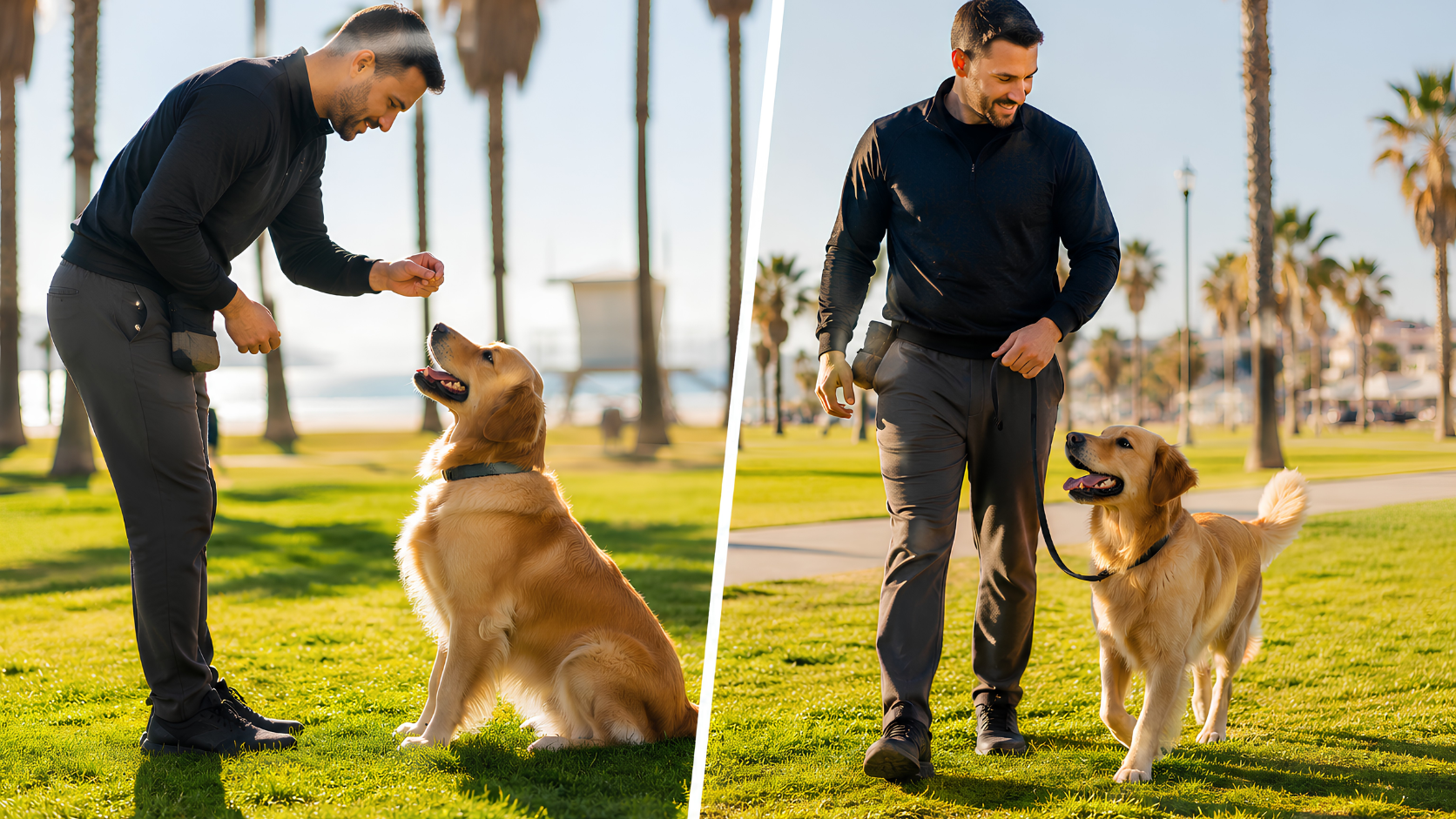
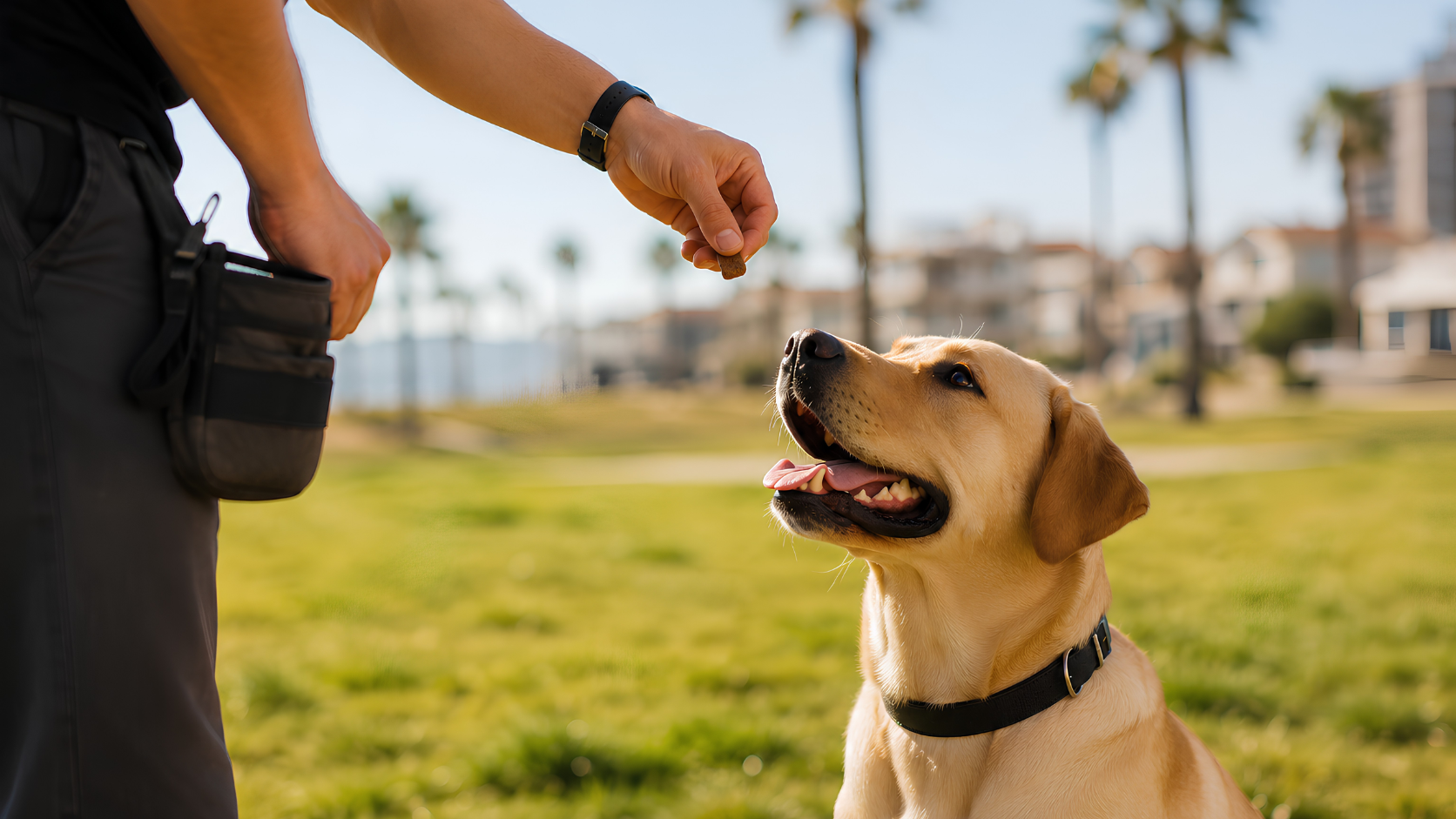
Positive dog training usually focuses on rewarding the behavior you want. That reward might be food, praise, play, toys, affection, or access to something the dog wants.
The idea is simple: when the dog makes the right choice, the dog gets something good. Positive training can be helpful for teaching:
- Sit
- Down
- Stay
- Come
- Leash Basics
- Puppy Manners
- Confidence
- Focus
- New Commands
- Socialization skills
For many dogs, rewards work well. Dogs repeat what pays off. If sitting gets praise, food, or play, the dog is more likely to sit again.
That part makes sense.
The problem is not rewards. Rewards are useful. The problem is when the dog only listens when a reward is visible.
If your dog only obeys when you have a treat in your hand, that is not finished training. That is bribing.
A good reward system should help teach the dog. Over time, the dog should also learn to respond because the command matters, not only because food is available.
What is balanced dog training?
Balanced dog training uses rewards and corrections.
That means the dog is rewarded for the right behavior and corrected for behavior that is not allowed.
A balanced approach may use food, praise, play, leash guidance, structure, boundaries, and fair corrections when needed.
The goal is not to scare the dog or be harsh. Good balanced training should be clear and fair.
The dog should understand two things:
- “Yes, that is what I want.”
- “No, that is not allowed.”
That clarity can help dogs who are confused, pushy, reactive, overstimulated, or used to ignoring commands.
Balanced training can help with:
- Leash Pulling
- Jumping
- Not listening
- Door rushing
- Place command
- Impulse control
- Reactivity
- Overexcitement
- Boundary setting
- Stronger obedience around distractions
The correction should fit the dog, the behavior, and the situation. It should not be emotional. It should not be angry. It should not be used to punish fear.
A correction is only useful if it helps the dog understand what to do instead.
Positive training and balanced training both use rewards
This is where people get confused. Balanced training does not mean “no rewards.” A good balanced trainer still uses motivation. Food, praise, play, toys, and affection can all be part of the training.
The difference is that balanced training also teaches the dog that some behaviors are not acceptable.
For example, if a dog jumps on guests, positive training may reward the dog when all four paws are on the floor. Balanced training may reward calm behavior and also correct the jumping so the dog learns that jumping is not allowed.
Both methods may reward the right behavior. Balanced training also gives a clear consequence for the wrong behavior.
The problem with using only treats
Treats can be useful. They are especially helpful when teaching a new command. But treats should not become the whole relationship. If the dog only listens when food is present, the training is weak.
The owner may feel stuck carrying treats everywhere. The dog may learn to check your hand before deciding whether to listen. That is not reliable obedience.
A better system uses treats to teach, then slowly fades them out once the dog understands. After that, the dog can be rewarded with praise, play, freedom, affection, or access to something they want.
The goal is not to remove rewards completely. The goal is to stop depending on food as the only reason your dog listens.
Why motivation still matters
Dogs need motivation.
Some dogs love food. Some dogs care more about toys. Some dogs work better for praise. Some dogs love movement, tug, chase, or a simple chance to go sniff. A good trainer should figure out what motivates the dog.
That matters because every dog is different.
One dog may work hard for a small treat. Another may ignore food but come alive for a ball. Another may want praise from the owner more than anything else.
Training works better when the reward means something to the dog. The mistake is assuming every dog should be trained the exact same way.
Why structure matters too
Motivation is important, but motivation without structure can fall apart. A dog still needs rules.
The dog needs to know when to walk calmly, when to stay in place, when to come when called, when to stop jumping, when to leave something alone, and when to settle down.
Structure helps the dog understand what is expected. This is especially important for dogs that are pushy, anxious, reactive, or easily overstimulated. Some dogs do not need more excitement. They need calm direction.
A good training plan should teach the dog what to do and what not to do.
What about corrections?
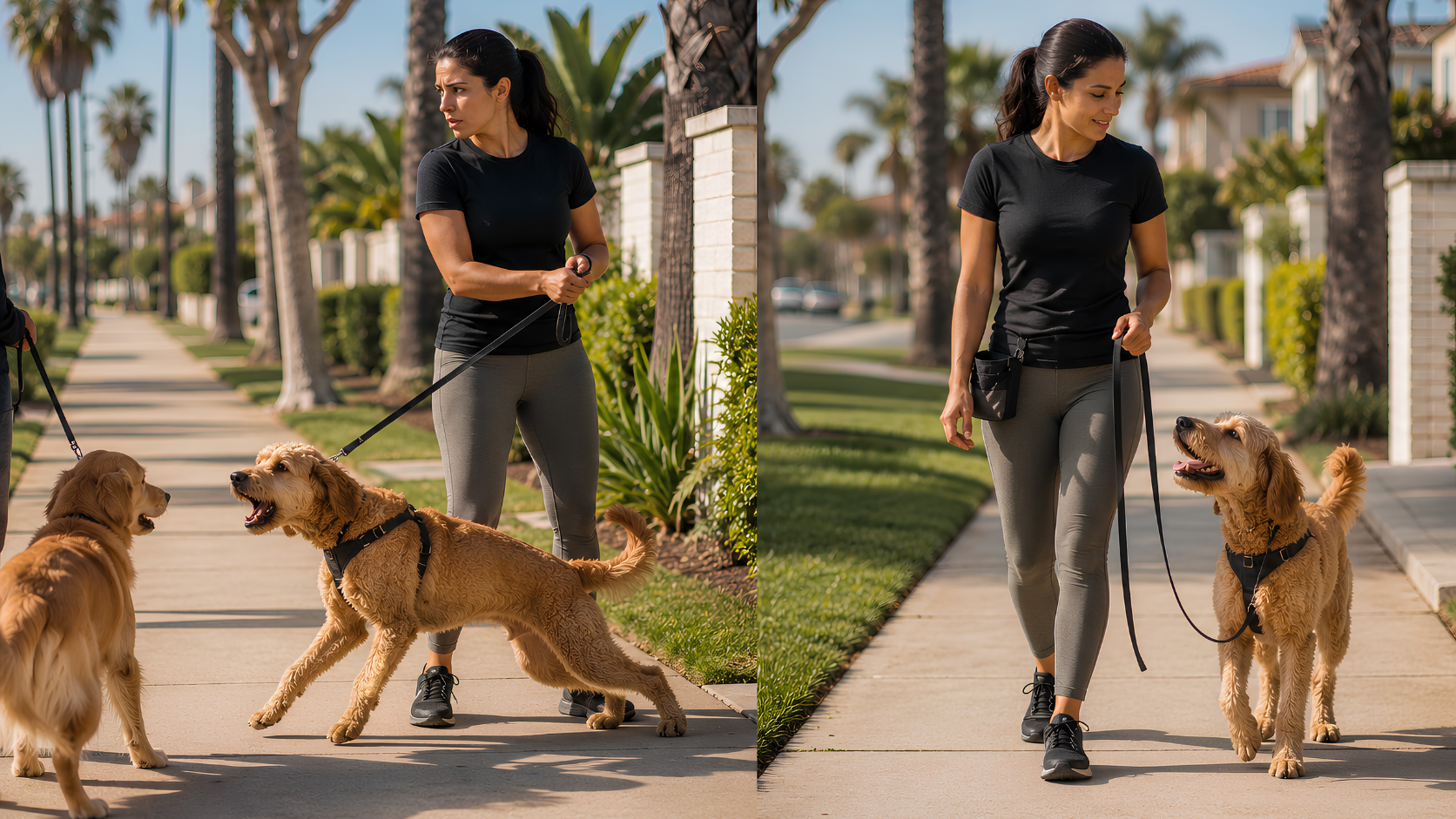
Corrections are one of the biggest differences between positive and balanced training. A correction should not be random. It should not be emotional. It should not be used because the owner is frustrated.
A fair correction should be:
- Clear
- Timed properly
- Appropriate for the dog
- Connected to the behavior
- Followed by direction
- Paired with teaching the right behavior
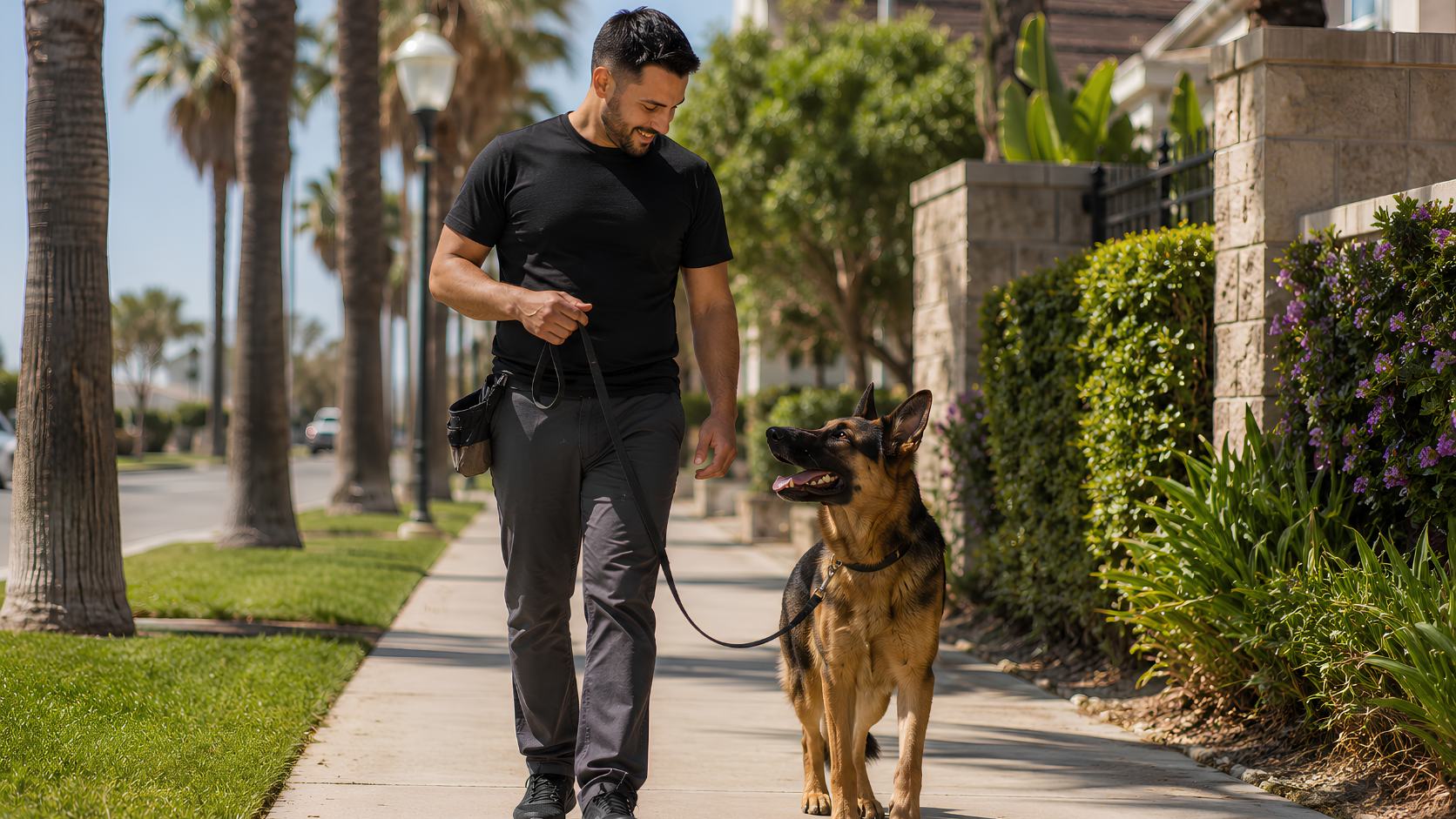
For example, if a dog pulls hard on leash, the correction should help interrupt the pulling and guide the dog back into the right position. The dog should then be rewarded or praised for walking correctly.
The correction tells the dog, “Do not do that.”
The guidance tells the dog, “Do this instead.”
That second part matters.
If all you do is correct the dog without teaching the right behavior, the dog may become confused or stressed.
What training style is best for puppies?
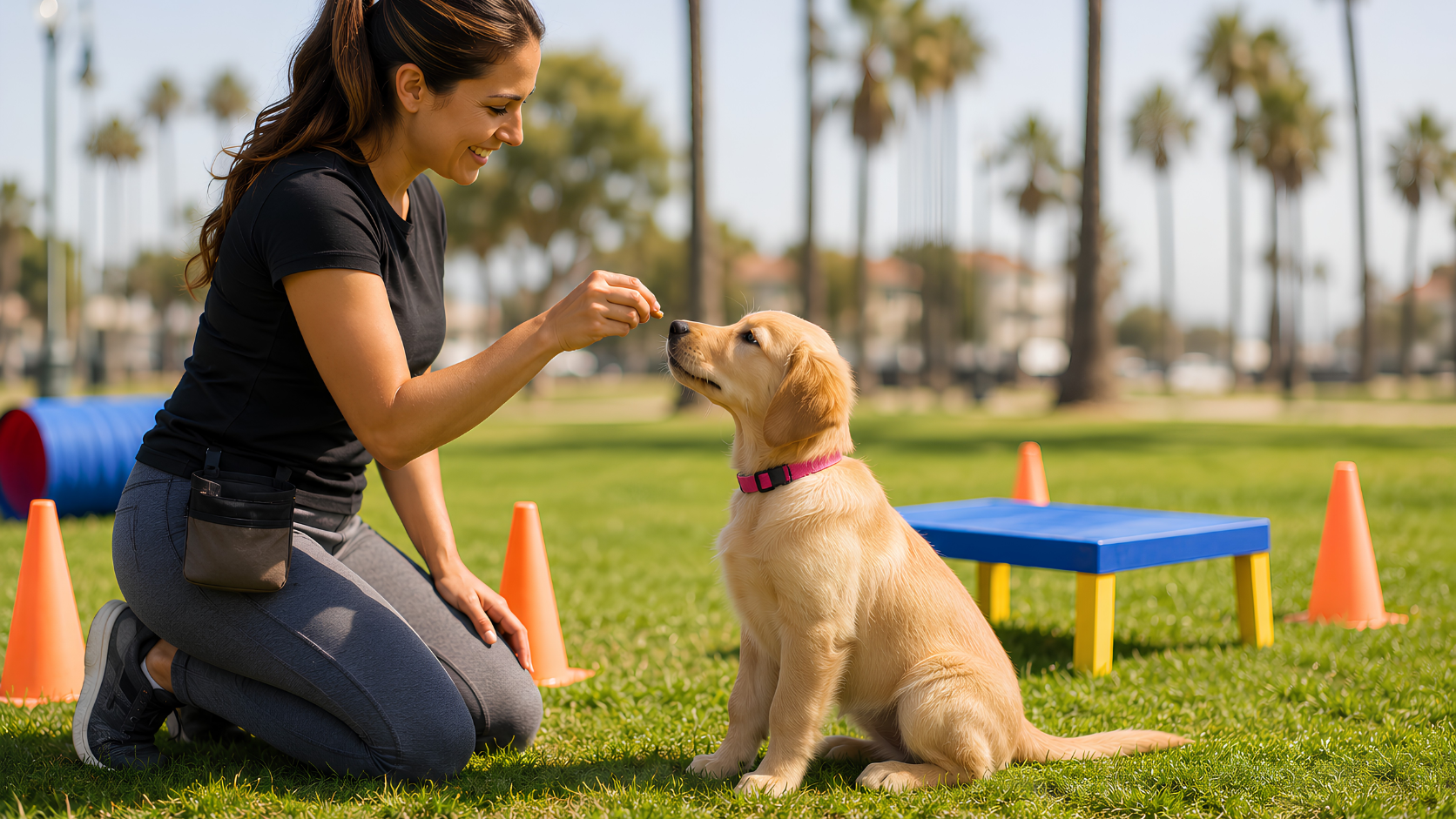
Most puppies need a lot of positive teaching. They are young. They are learning the world. They need confidence, structure, repetition, and clear routines.
Puppy training should focus on:
- Jumping
- Puppy biting
- Potty training
- Crate training
- Name recognition
- Leash basics
- Handling
- Socialization
- Sit, down, stay, and come
- Learning how to settle
For puppies, rewards are very helpful. Food, play, praise, and affection can all work well.
But puppies also need boundaries. They should not be allowed to bite hands, jump on everyone, rush through doors, pull nonstop, or ignore basic direction. That does not mean harsh training. It means clear rules early. A puppy that learns structure early is usually easier to guide as they grow.
What training style is best for reactive dogs?
Reactive dogs need more care.
A reactive dog may bark, lunge, growl, pull, freeze, or overreact around dogs, people, bikes, skateboards, cars, or busy environments. The right method depends on why the dog is reacting.
A fearful dog may need space, confidence, and careful exposure.
A frustrated dog may need impulse control and better leash manners.
A pushy dog may need clearer boundaries.
A dog with aggression concerns may need a more detailed plan.
This is why labels can be dangerous.
Saying “only use positive training” or “only use balanced training” may miss what the dog actually needs. Reactive dogs should not all be trained the same way.
If your dog reacts during walks in Huntington Beach, near parks, on sidewalks, or around beach-area distractions, talk with a trainer before guessing at the method.
What should dog owners look for in a trainer?
Do not choose a trainer based only on the label. “Positive” and “balanced” do not tell you everything. Ask better questions. A good trainer should be able to explain:
- How they teach new commands
- How they reward the dog
- How they correct unwanted behavior
- How they handle fear or anxiety
- How they work with reactivity
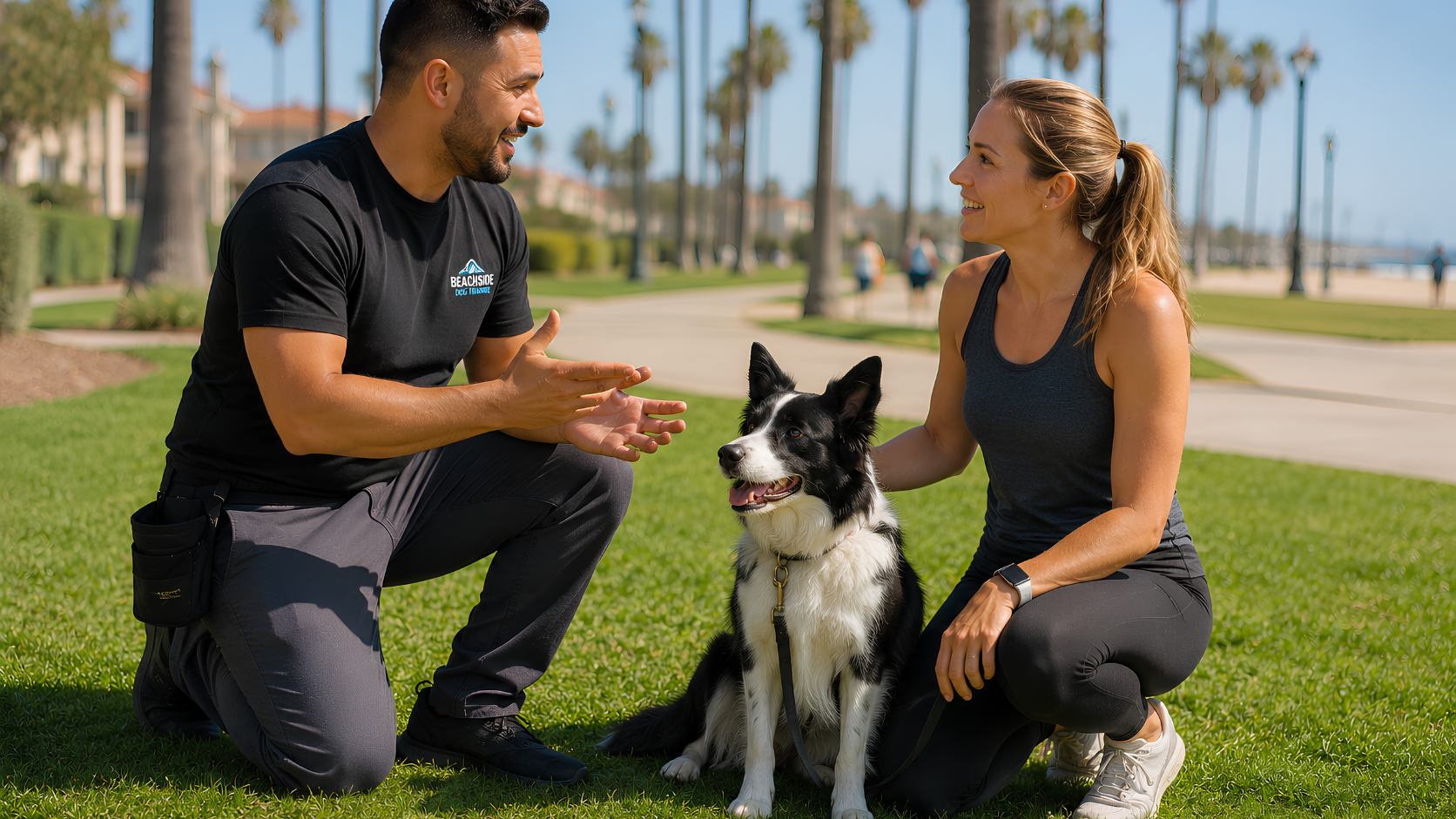
- How they help the owner continue training at home
- What results are realistic
- What the owner needs to practice between sessions
You should feel like the trainer has a plan.
Not a script. Not a one-size-fits-all method. A real plan for your dog.
Red flags to watch for
Some training methods can create more problems if they are used poorly.
Be careful if a trainer:
- Promises instant results
- Uses the same method for every dog
- Cannot explain why they use a certain tool
- Corrects fear without building confidence
- Relies only on treats without building real obedience
- Avoids owner coaching
- Blames the dog without teaching the owner
- Uses harsh handling or anger
- Gives no plan for practice at home
Good training should make the dog clearer, calmer, and more reliable.
It should not make the dog confused, shut down, or afraid of the owner.
So which is better?
The better question is not, “Is positive or balanced training better?”
The better question is, “What does this dog need?”
Some dogs need more motivation.
Some need more structure.
Some need confidence. Some need boundaries.
Some need all of the above.
A good training plan should fit the dog in front of you.
Positive reinforcement is useful.
Motivation matters.
Structure matters.
Fair corrections can matter too.
The goal is not to win an argument about training labels. The goal is to help the dog understand what is expected and help the owner communicate clearly.
Positive vs. balanced dog training in Huntington Beach
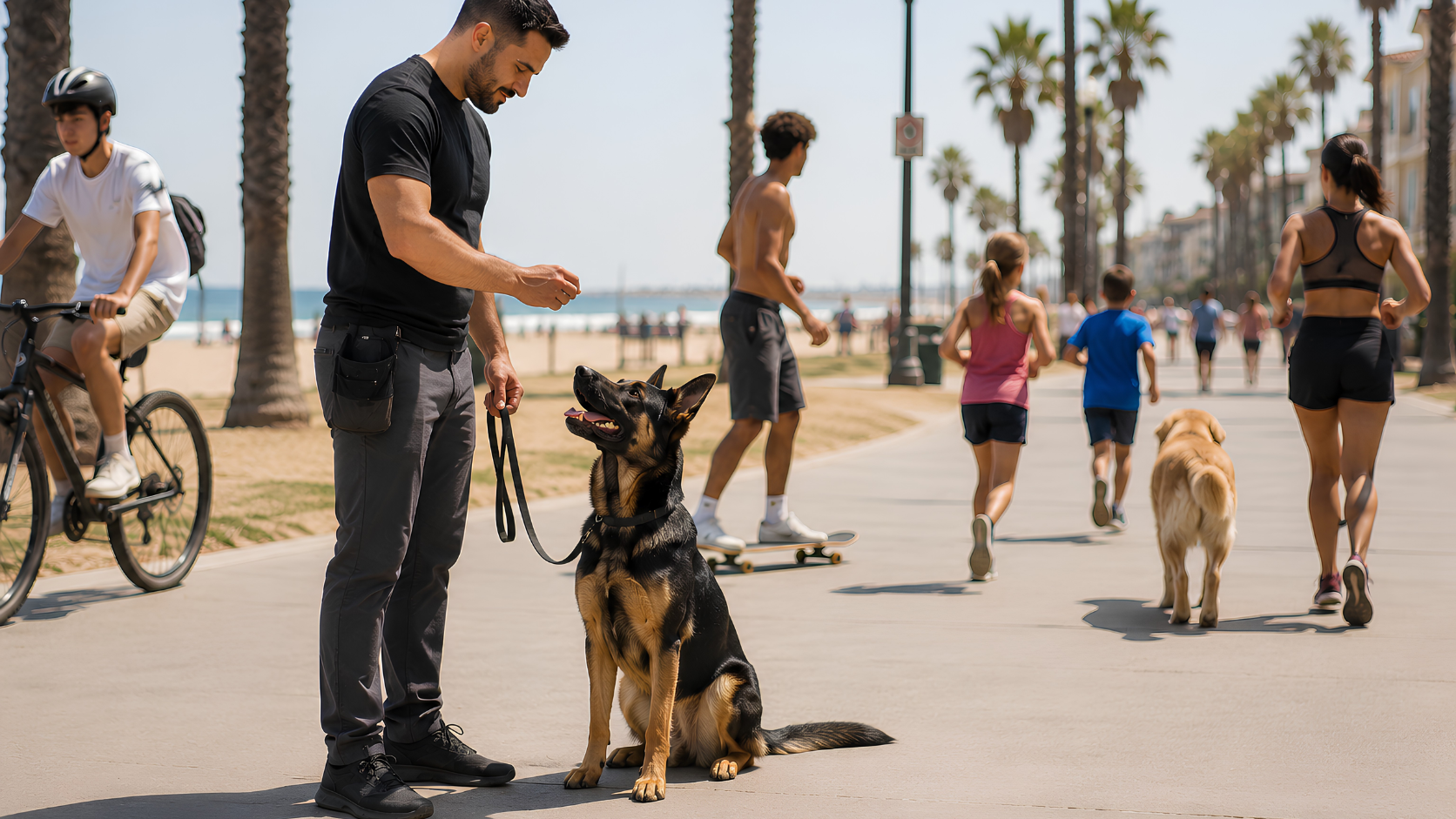
If you are in Huntington Beach or surrounding Orange County areas, your dog is probably dealing with real-world distractions every day. Walks may include other dogs, bikes, skateboards, beach paths, parks, visitors, traffic, and busy sidewalks.
That is where training has to hold up. It is one thing for a dog to sit in a quiet room. It is another thing for the dog to listen when life is happening
around them.
At Beachside Dog Training, the goal is to help owners build clear communication, better obedience, and real-world control that makes daily life easier.
Final thoughts
Positive training and balanced training both have a place.
Rewards help teach the dog what to do. Structure helps the dog understand what is expected. Fair corrections can help stop unwanted behavior when they are used properly.
The best training is not about picking a side.
It is about using the right approach for the dog, the behavior, and the owner.
If your dog needs help with obedience, leash manners, reactivity, puppy training, or behavior problems, Beachside Dog Training can help you choose the right path.
Need help choosing the right training approach?
If you are not sure what kind of training your dog needs, our team can help.
Whether your dog needs private training, group obedience, in-home support, puppy training, or behavior help, Beachside Dog Training can guide you toward the right plan.
Contact Beachside Dog Training today and we will help you build a training approach that fits your dog, your goals, and your daily routine.
• Still not sure what your dog needs? Visit our Dog Training FAQ to learn what kind of results to expect and how long solid obedience takes.
Learn & Explore More
• Read our full Dog Training Services Guide to learn about the different training options available in Huntington Beach and Orange County.
• Compare program options like group classes, private training, in-home support, and board and train to see which type of training may fit your dog best.
• Visit our Private Dog Training page if your dog needs one-on-one help with obedience, leash manners, reactivity, or behavior concerns.
• Explore our Board and Train programs if your dog needs more structure, daily consistency, and a stronger training foundation.
• Read our guide on Reactive Dog Training in Huntington Beach if your dog barks, lunges, or overreacts on leash.

Subscribe Our Newsletter
Stay connected with us for training tips, updates, and real progress from dogs across Orange County.

Beachside Dog Training — Calm, reliable dogs. Confident owners.
Huntington Beach facility
(partner: Splash Premier Pet Resort)
Serving HB, Fountain Valley, Costa Mesa, Newport Beach, Westminster, Irvine, and nearby OC/LA.
Quick Link
Useful Links
Contact Info
- 17052 Gothard St, Huntington Beach, CA 92647
- (714) 702-5024
- beachsidedogtraining@gmail.com
Instagram Post



Developed by Webdevsters
Copyright © 2025. All rights reserved.