
Dog Daycare Pros and Cons: Is It Right for Your Dog?
admin
April 28, 2026
Dog Daycare Pros and Cons: Is It Right for Your Dog?
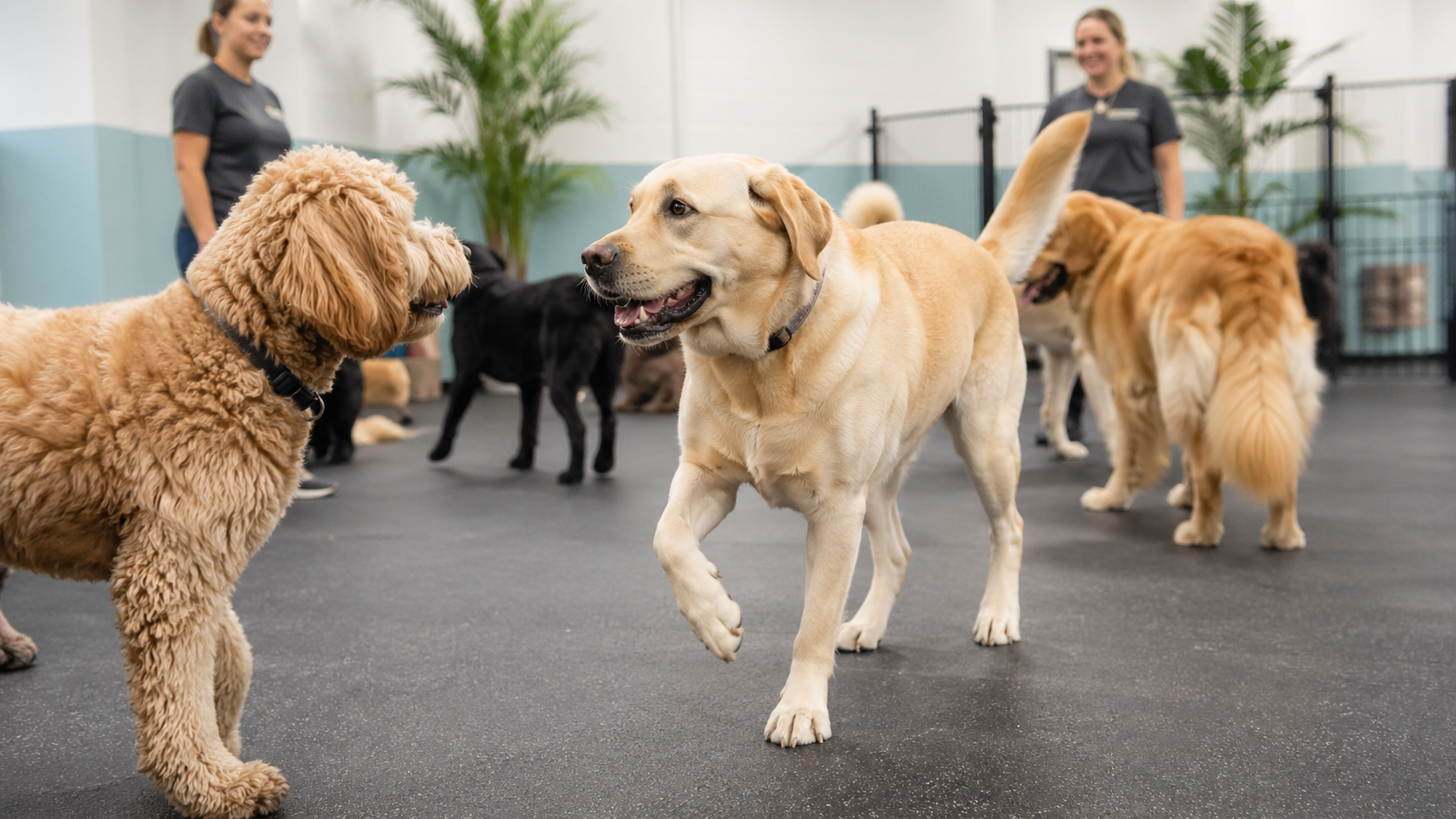
Dog daycare can be a lifesaver for a lot of people. You drop your dog off in the morning, pick him up eight hours later, and he comes home happily tired for the rest of the evening. For busy owners, that can make a huge difference.
It’s difficult for many people to give their dogs enough appropriate outlets, both physically and mentally. A good daycare can help with that. Dogs get movement, stimulation, social time, and a break from being home alone all day.
But like anything else, dog daycare is not perfect for every dog. Some dogs thrive in that environment. Others may become overwhelmed, overstimulated, or develop habits that make life harder at home. The key is understanding the pros and cons of dog daycare so you can decide if it is the right fit for your dog.
What are the benefits of dog daycare?
The biggest benefit of dog daycare is that it gives dogs a healthy outlet during the day.
Many dogs are under-stimulated at home. They spend long hours alone, waiting for their owners to return. By the time the owner gets home from work, the dog is full of energy and ready to go, while the owner is tired and ready to relax. Daycare helps bridge that gap.
Here are some of the main benefits:
1. Dogs get the exercise they need
Most dogs need more movement than they get in the average household. A quick walk around the block may not be enough, especially for young dogs, active breeds, or dogs with high energy levels.
Dog daycare gives dogs a place to move, play, run, and burn energy in a supervised setting. When this is done well, it can help reduce restlessness, boredom, and pent-up energy at home.
A tired dog is often easier to live with. He is more likely to settle, rest, and relax after a full day of appropriate activity.
2. Dogs get social time with other dogs
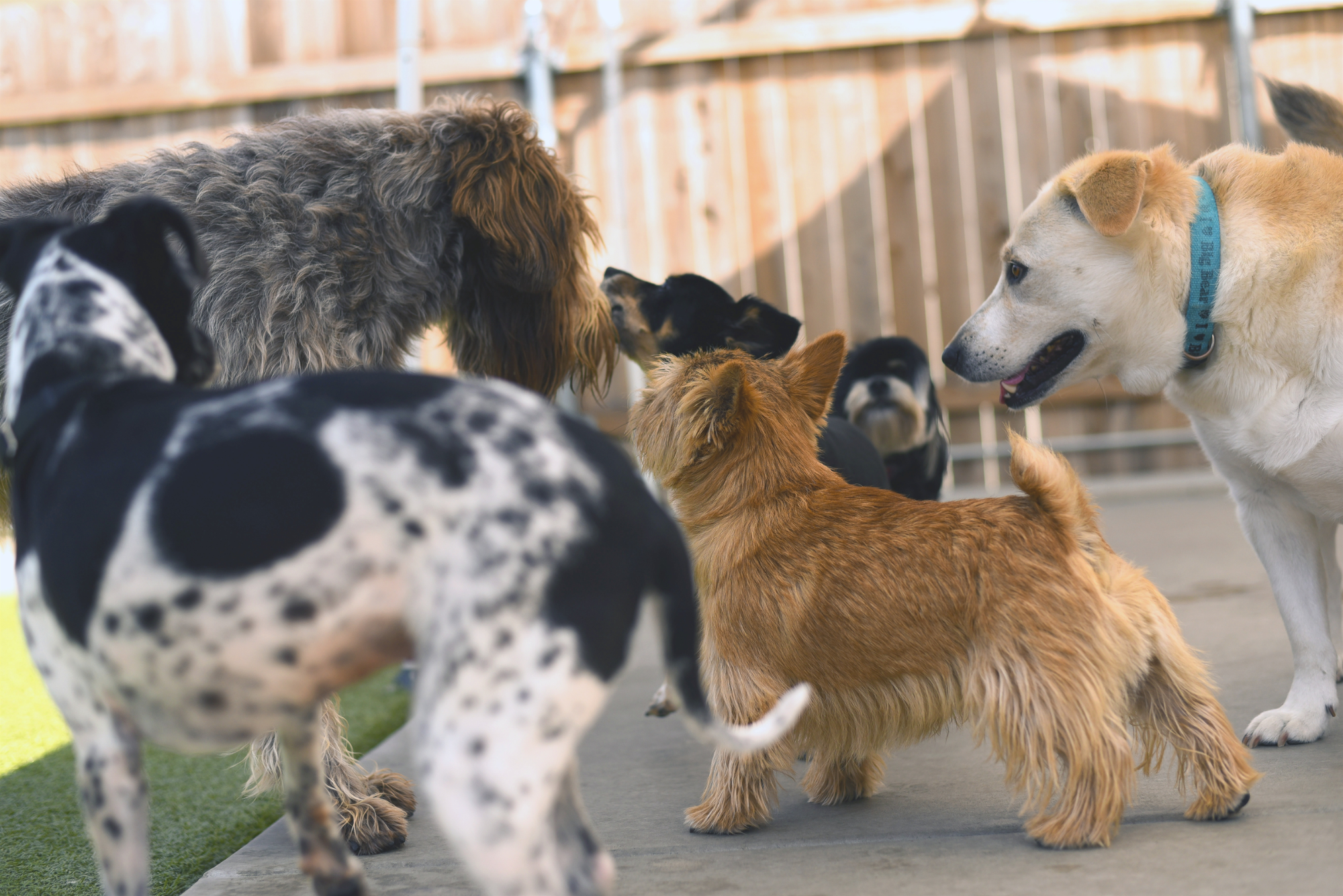
For dogs who are naturally social, daycare can be a great opportunity.
They get to interact with other dogs, practice reading body language, and enjoy group play. This can be especially helpful for dogs who love the company of other dogs and do well in social settings.
But this point matters: not every dog wants constant dog-to-dog interaction. Some dogs enjoy it. Some tolerate it. Some find it stressful. A good daycare should understand the difference and group dogs carefully based on size, temperament, age, and play style.
3. Dogs spend time away from their owners
This is another benefit that people do not always think about.
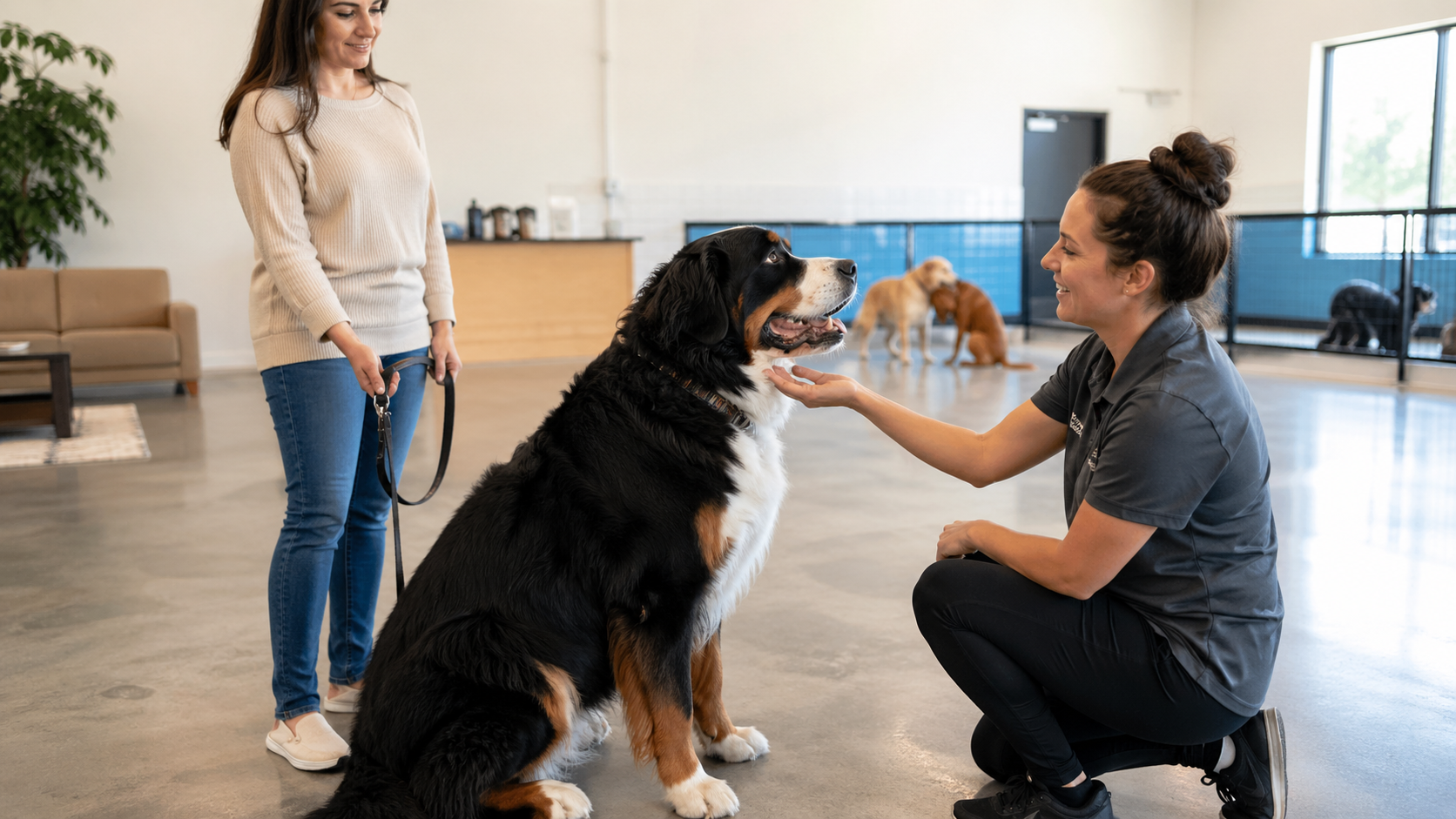
Some dogs become too dependent on constant access to their owners. Daycare can help them practice being away from their people in a structured environment. This can build confidence and help them learn that being separated from their owner is not always a bad thing.
For dogs that enjoy daycare, this time away can be positive. They learn to engage with other people, follow routines, and settle into a different environment.
4. Dogs are supervised during play
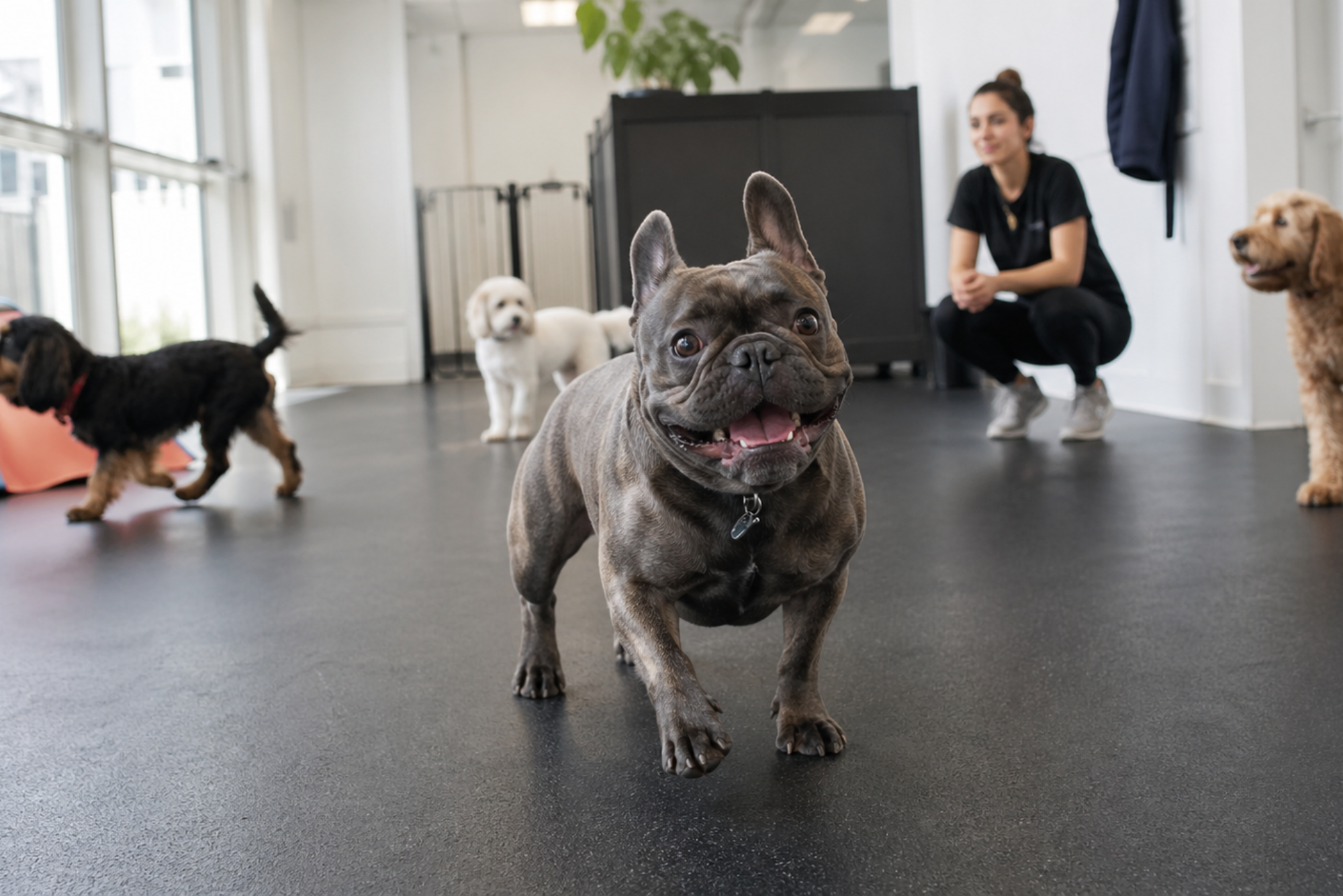
Good daycare is not just a room full of dogs running wild.
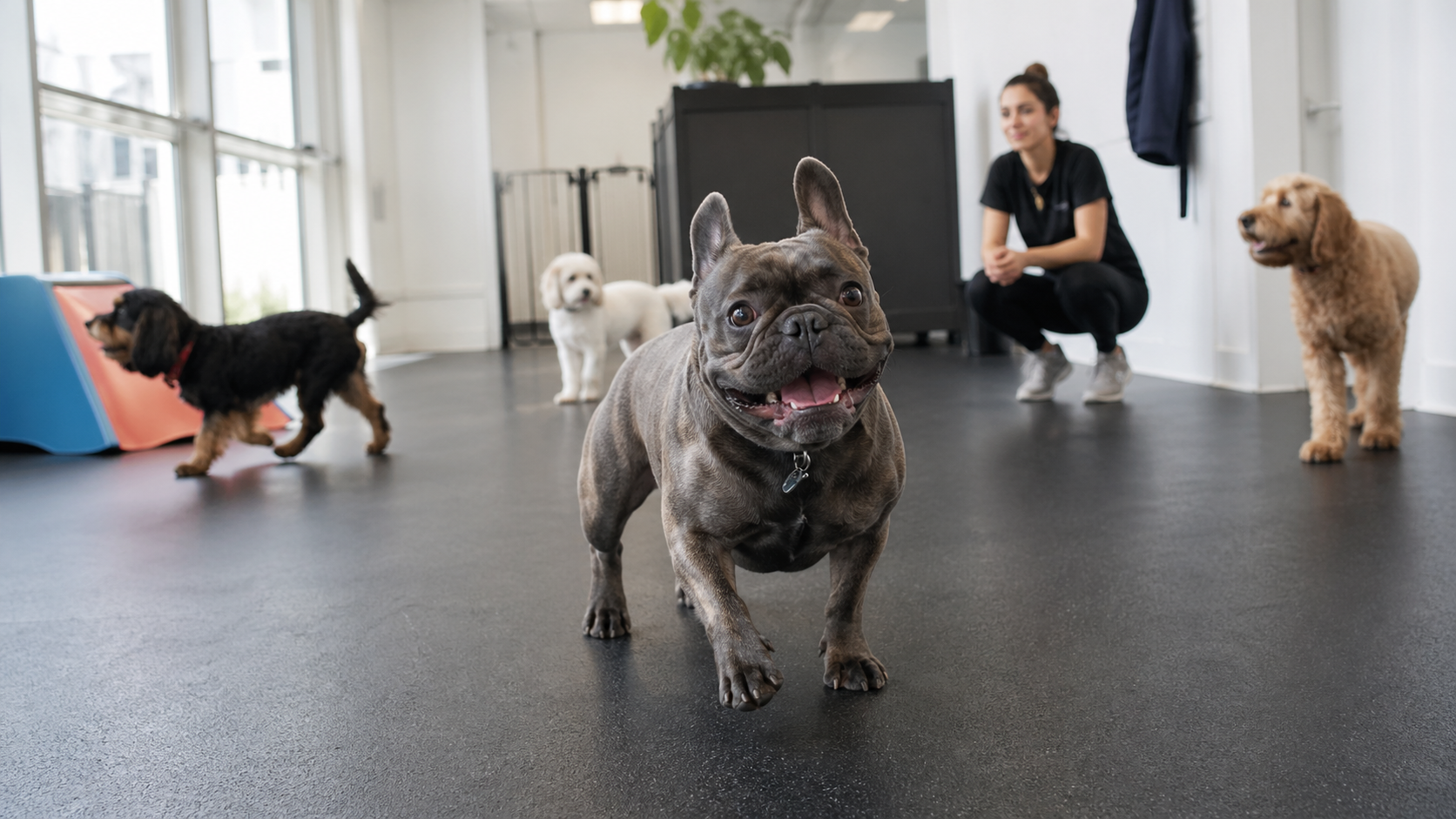
A quality dog daycare should have trained staff watching the dogs, interrupting inappropriate behavior, managing play groups, and making sure things do not escalate. Supervision matters because dogs can get too intense, too pushy, or too overstimulated during play.
Careful supervision helps keep play safer and more balanced. It also gives owners peace of mind knowing their dog is not just being left alone in a yard or room with other dogs.
5. Daycare can prevent problems from being left home alone
Some dogs struggle when left home for long hours. They may chew, bark, dig, pace, or become anxious. Others simply get bored and create their own entertainment.
Dog daycare can help prevent those problems by giving the dog something productive to do during the day. Instead of sitting at home alone for eight hours, the dog gets activity, structure, and attention.
For owners who work long days, this can be a practical solution.
What are the drawbacks of dog daycare?
Dog daycare can be great, but it is not without risks.
The wrong daycare, the wrong group of dogs, or the wrong fit for your dog can create problems. It is important to look at the full picture before assuming daycare is automatically the best option.
1. Dogs can get hurt
Even in a well-run daycare, dogs are still dogs.
They run, jump, wrestle, chase, and play with their mouths. Depending on the play style of your dog and the dogs around him, injuries can happen. A dog may get scratched, knocked over, bitten, or hurt during rough play.
This does not always mean the daycare did something wrong. But it does mean owners should understand the risk. Group play always comes with some level of unpredictability.
If your dog is very small, very fragile, overly intense, or easily overwhelmed, daycare may need to be approached carefully.
2. Dogs can get sick
This is similar to children going to school and coming home with a cold.
When dogs are around other dogs, there is always a chance they can pick up something contagious. Kennel cough, stomach bugs, skin issues, or other common illnesses can spread in group settings.
A good daycare should require appropriate vaccinations and have cleaning protocols in place. Still, no facility can remove every risk. If your dog goes to daycare regularly, occasional exposure to germs is part of the reality.
3. Dogs can become dependent on high levels of exertion
This is one of the biggest drawbacks that owners may not expect.
Some dogs go to daycare so often that they become used to a very high level of daily stimulation. Then, on the days they do not go, they seem impossible to live with. They are too energetic, too restless, or unable to settle calmly at home.
This can create a cycle where the dog needs more and more activity just to be manageable.
A balanced dog should be able to enjoy activity, but also relax. Daycare should help your dog’s life, not become the only reason he can function at home.
How do you know if dog daycare is right for your dog?
The best daycare candidates are usually dogs who are social, confident, healthy, and comfortable around other dogs.
They enjoy group play without becoming pushy or overwhelmed. They can handle stimulation without losing control. They recover well after excitement. They are not constantly stressed, defensive, or overly intense.
Dog daycare may be a good fit if your dog:
- Enjoys playing with other dogs
- Has a friendly, social temperament
- Handles new environments well
- Has energy that needs a healthy outlet
- Comes home tired but not stressed
- Can still relax on non-daycare days
Dog daycare may not be the best fit if your dog:
- Is fearful or defensive around other dogs
- Gets overwhelmed in busy environments
- Plays too rough and ignores correction
- Has a history of aggression
- Cannot settle unless completely exhausted
- Becomes more anxious or overstimulated after daycare
The goal is not just to ask, “Is daycare good?” The better question is, “Is daycare good for MY dog?”
What should you look for in a good dog daycare?
A good daycare should feel organized, clean, and carefully managed.
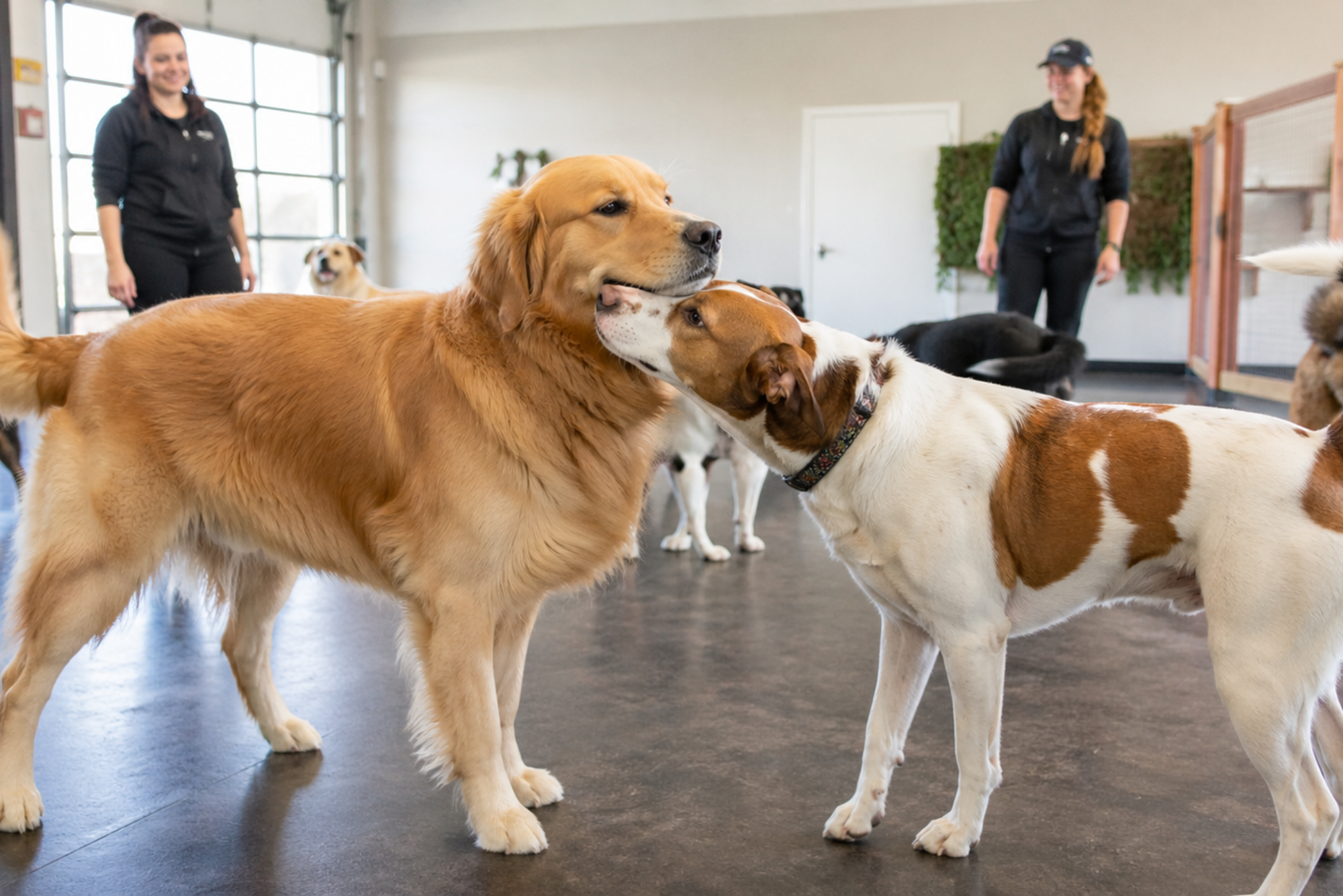
Ask how dogs are evaluated before joining play groups. Ask how they separate dogs by size, age, temperament, and play style. Ask what staff members do when play gets too rough. Ask how many dogs are supervised by each staff member.
You want a daycare that pays attention, not one that simply throws dogs together and hopes for the best.
Look for a facility that:
- Evaluates dogs before accepting them
- Separates play groups appropriately
- Has trained staff supervising the dogs
- Keeps the space clean
- Communicates honestly with owners
- Allows rest breaks when dogs need them
- Does not force every dog into group play
- Understands dog body language
A good daycare should be willing to tell you if your dog is not a good fit. That honesty matters.
What should you watch for after daycare?
Your dog’s behavior after daycare tells you a lot.
Some dogs come home relaxed, content, and ready to rest. That is usually a good sign. Other dogs come home frantic, overly tired, irritable, sore, or more reactive than usual. That may mean the environment is too much for them.
Pay attention to patterns.
If your dog is happy going in, relaxed coming out, and behaves well at home afterward, daycare may be a great outlet. If your dog starts resisting going inside, seems stressed afterward, or becomes harder to manage on non-daycare days, it may be time to reassess.
How often should a dog go to daycare?
This depends on the dog.
Some dogs do well going a few times a week. Others only need one day here and there. Some dogs should not go at all. More is not always better.
A balanced routine might include daycare, walks, training, rest, and calm time at home. Dogs need outlets, but they also need to learn how to settle. Constant stimulation can create a dog who does not know how to be calm.
For many dogs, daycare works best as part of a larger routine—not the whole routine.
Should puppies go to daycare?
Puppies can benefit from safe social experiences, but daycare should be chosen carefully.
Puppies are still learning how to interact with the world. The wrong environment can overwhelm them or teach bad habits. If the daycare is too chaotic, a puppy may learn to be pushy, nervous, or overly excited around other dogs.
For puppies, structure matters. They need supervised socialization, rest breaks, gentle handling, and appropriate playmates. A good puppy program can be helpful. A free-for-all play group is not the same thing.
When should you call a trainer?
If you are unsure whether daycare is right for your dog, a trainer can help you make that decision.
A trainer can look at your dog’s temperament, behavior, confidence level, and social skills. They can also help you build better manners before introducing daycare or help correct habits that may have developed from too much unstructured play.
If your dog is reactive, anxious, overly rough, or difficult to manage after daycare, getting professional guidance can prevent small problems from becoming bigger ones.
If you’re in Huntington Beach or anywhere in Orange County, our trainers can help you decide whether dog daycare is the right fit for your dog and what kind of structure would support them best.
So, is dog daycare worth it?
For many dogs, yes.
For dogs who are sociable, confident, and genuinely enjoy the company of others, the pros often outweigh the cons. A good daycare can provide exercise, stimulation, social time, and relief for busy owners.
But daycare should be chosen wisely. The right facility matters. Your dog’s temperament matters. Balance matters.
If your dog enjoys it, he will probably tell you after one visit. We hear dogs whining with excitement in their cars as soon as they turn the corner. That kind of happy anticipation says a lot.
Dog daycare can be a wonderful tool when it fits the dog. Just make sure it is helping your dog become healthier, happier, and more balanced—not simply more dependent on constant excitement.
Local Dog Training Support in Orange County
If you’re in Huntington Beach or anywhere in Orange County, our team at Beachside can help with your dog’s training or daily routine, our Beachside team is here to support you.
Next Steps
If you’d like help creating reliable training that lasts, our Beachside trainers are here to support you.
• Still not sure what your dog needs? Visit our Dog Training FAQ to learn what kind of results to expect and how long solid obedience takes.
• Contact our Beachside team and we’ll help you choose the right training program for your dog.
Learn & Explore More
• Read our full Dog Training Services Guide to see how we build real-world obedience and motivation in Huntington Beach and Orange County.
• For dogs that need motivation and focus around real-world distractions, explore our Group Obedience Classes.
• If you need hands-on support, visit our Private Dog Training page.



Subscribe Our Newsletter
Stay connected with us for training tips, updates, and real progress from dogs across Orange County.

Beachside Dog Training — Calm, reliable dogs. Confident owners.
Huntington Beach facility
(partner: Splash Premier Pet Resort)
Serving HB, Fountain Valley, Costa Mesa, Newport Beach, Westminster, Irvine, and nearby OC/LA.
Quick Link
Useful Links
Contact Info
- 17052 Gothard St, Huntington Beach, CA 92647
- (714) 702-5024
- beachsidedogtraining@gmail.com
Instagram Post





Developed by Webdevsters
Copyright © 2025. All rights reserved.